
MS vs SS Fabrication: Differences, Applications & Benefits
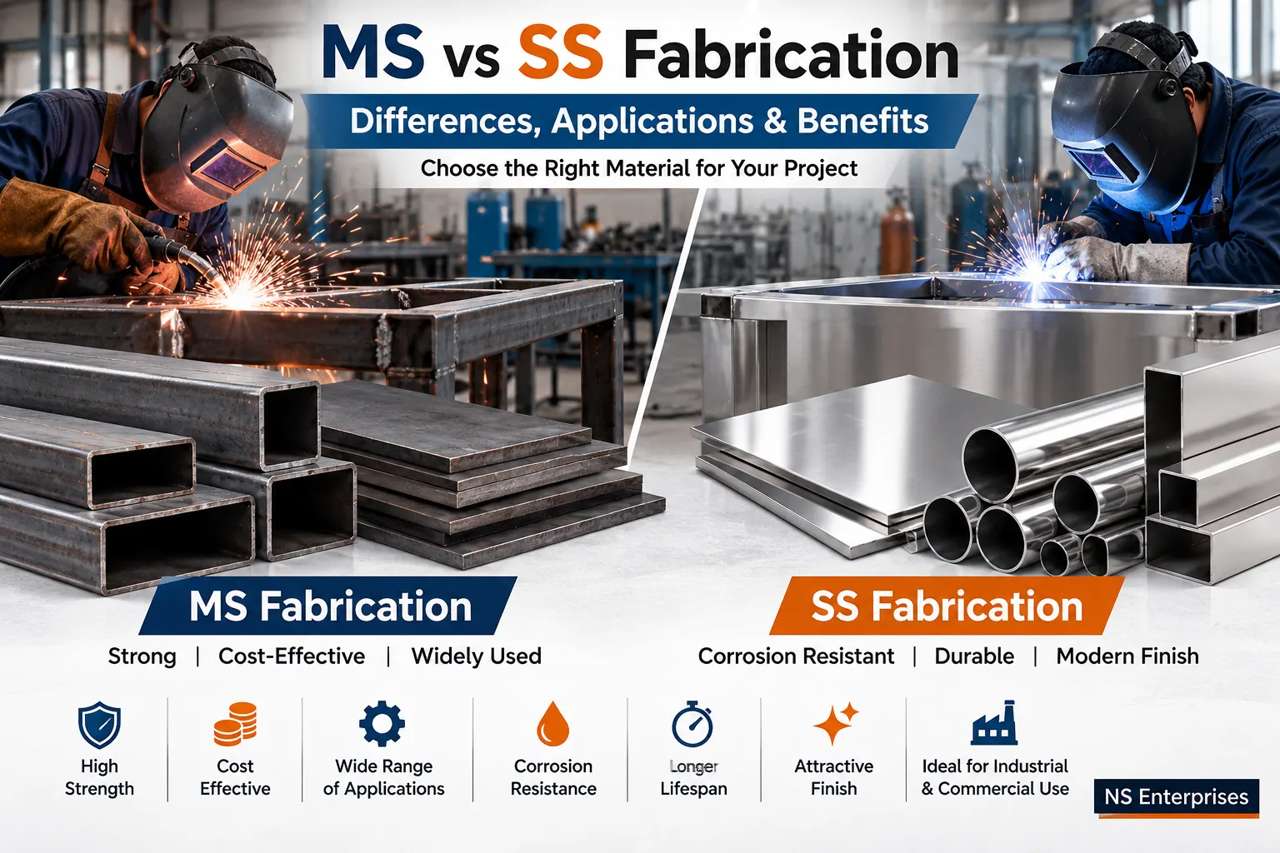
MS vs SS Fabrication: Which Material Is Best for Your Project?
Mild Steel (MS) and Stainless Steel (SS) fabrication are essential processes in modern industrial, commercial and manufacturing applications. Both materials offer unique advantages in terms of strength, durability, workability, corrosion resistance and cost, making them suitable for different types of fabrication projects. Choosing the right material is important for ensuring product quality, structural reliability, long-term performance and cost efficiency.
In this blog, we explore the key differences between MS and SS fabrication, including their material properties, welding techniques, cutting, bending, finishing processes and practical applications. Learn how MS fabrication is commonly used for structural frameworks, industrial platforms, machinery components, support structures and heavy-duty metal products, while SS fabrication is preferred for applications requiring corrosion resistance, hygiene, an attractive finish and long-lasting performance, such as commercial kitchens, food processing equipment, stainless steel worktables, storage units and industrial equipment.
We also discuss the factors that influence fabrication costs, including material grade, sheet thickness, project dimensions, design complexity, welding requirements and finishing specifications. Understanding these factors can help manufacturers, contractors, engineers and business owners make informed decisions when selecting materials for their projects.
Whether you require mild steel fabrication, stainless steel fabrication, custom sheet metal fabrication or industrial welding solutions, understanding the differences between MS and SS can help you choose the most suitable option for your operational needs. For businesses in Gurgaon, Manesar and Delhi NCR, selecting an experienced fabrication partner is equally important for achieving accurate dimensions, reliable workmanship and consistent product quality. Explore this guide to understand which material is best suited to your fabrication requirements and how the right choice can support the performance and longevity of your project.